
How Grief Ends

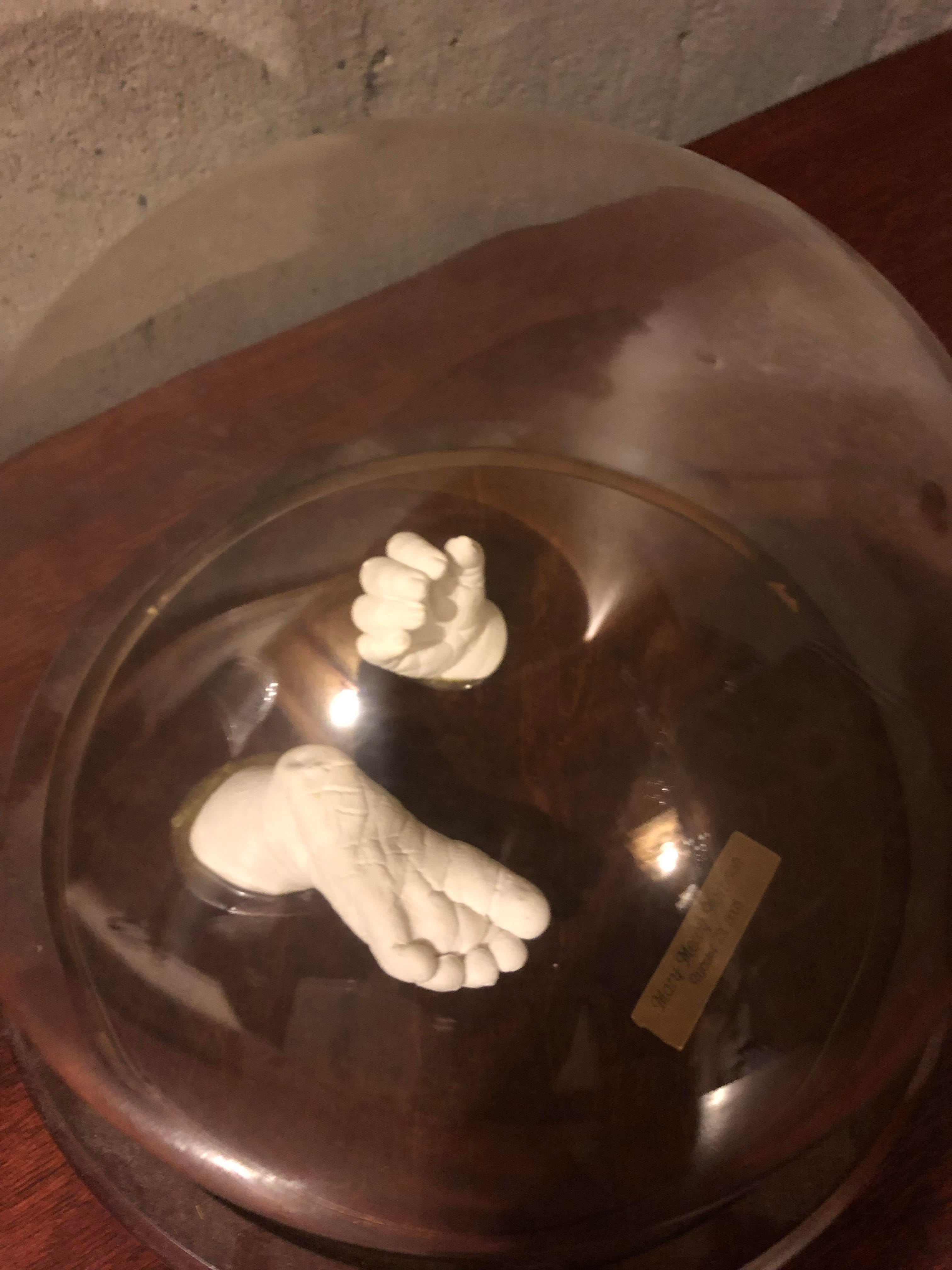
My daughter died on this date nineteen years ago. Her name was Mercy and I loved her so much, even before I knew her, that her loss remains one of the deepest tragedies of my life. I know that for other people, she was just a potentiality. And even for me, one of the saddest things about her death is that I never got to know her. She died at 42 weeks gestation, after a really devastating experience that probably makes no sense to anyone outside of Mormonism, but for years when I talked about her loss, I was pressured to confess that she was with God and that my faith was enough to make me believe that God was good, or that I believed that her loss had made me a better person.
I have come to a strange place where I think I am partly a better person because of her death and partly a worse person and also where I proclaim loudly to anyone who will listen to me that this kind of a calculus makes no sense at all when talking about the grief of child loss. Yes, sometimes I comfort myself with the idea that at least I’ve made something out of her loss. At least, I didn’t make it for nothing. At least I write about her, and in that way, I make her alive again for a few minutes when people read what I say about her loss.
But that is also nonsense in the calculation of grief. You can’t really make it better or worse by carrying that person into the future as we all try to do, or making that person a part of myself, or dedicating myself to some cause in that person’s name. The reality is that they are gone, and that life marches forward, and that people will always pressure you to “move on.” Mostly by this, I think that they mean stop talking about your grief because it is distressing to them and they’d rather you only talk about happy stuff (but not too much happy stuff because that’s bragging).
One of the things that I’ve learned about myself in this experience of grief is that there is something about the way I was built that makes it more difficult for me than for other people to accept change. I discovered this the first time that I moved as an adult, and found myself dreaming for months about living still in my other house, then woke up and felt dislocated on a daily basis. It was difficult for me to force myself to go out and explore the new physical locality that I lived in, difficult each time I had to go to a new place and try to get my brain to get used to it. That same difficulty with change happened when I left Mormonism and during the last few years of divorce. I struggle to adjust to the new life than other people seem to.
So it isn’t a surprise to me now to see that it took me much longer (by a factor of ten) to recover from my daughter’s loss than other people. In some ways, I didn’t seem affected at all by the grief, because I kept making meals for my kids, kept attending church, and even signed up for an Ironman. But the reality was that I was emotionally absent from the lives of my children for many years. I was terrified they were going to die, too, if a God who decided I deserved to learn a lesson through one child’s death ultimately decided I wasn’t learning that lesson fast enough. That terror made itself known in a strictly enforced vegan diet and enforced exercise for me—and for my kids. It’s taken more than a decade for me to let go of the desire to control the universe for all of us. I don’t spend every waking minute worried one of my kids will die crossing the street. It comes up now and again, but it isn’t a constant fear. And so I would say that in that way, I’ve mostly recovered.
In other ways, I think that I no longer have the expectation of Mercy’s life. I have “moved on” and don’t think about her constantly. I don’t necessarily think of this as a good thing, a morally superior stance. It’s just what happens to us humans. We live more in the now than in the past, and even someone like me, whose brain holds to the past for a lot longer, does eventually stop living in a world that no longer exists. In a clinical way, I might say that I probably just have very few of the same cells occupying my body space that I had when Mercy died. It wasn’t something that I tried to make happen. It just did. The “me” who mourned Mercy is also dead and that is frankly a relief. It makes life easier. But I don’t necessarily think that it’s good that it’s easier.
Right after Mercy died, I spent many hours knitting and crocheting blankets for other children who died at birth, so that their parents had a keepsake to bury them in. I did “grief work” in the form of donating time and money to the local charity who had come to help me in my time of need at the hospital. I wrote a memoir (which may someday be published, we’ll see). I tried to help people close to me who lost children moving forward.
But it was painful doing that work. I don’t do it anymore. Again, it’s easier not to put myself in the way of other people’s pain. So I don’t. Does that make me a better person or a worse person? It just makes me a human who has had a certain set of painful experiences and is able to function in the day-to-day world now by protecting herself in certain ways. I suspect many of the people who knew me in that old life would say that of course I am a worse person because I’m no longer active in my old faith. I don’t agree with that assessment, and I don’t really care about their opinions anymore, nor worry about God’s judgment on me and mine. Again, this is a relief, but not necessarily a good thing.
Mostly, what I think now is that the idea that I could somehow do anything to make myself move faster toward healing is foolish, the same kind of pride that made me imagine that becoming vegan and exercising in an extreme fashion would either satisfy God’s wrath toward me and mine or that it would physically keep us all from getting all the normal diseases of humanity. Yes, of course there are things that you can do to protect yourself from a lot of diseases. I’m not saying we have no power. But we don’t have the power that I wanted to have, that I needed to have. And I’ve stopped looking for that power most of the time. Again, is that a good thing or a bad thing? It just is.
Grief is something that gets less powerful with time, not because we work on making it hurt less, but because we literally stop being the person who was dealing with that pain. We stop having the ability to hold onto those memories because all memory fades with time. We stop hating ourselves because it just takes too much time and energy to do so.
So, if you know someone who is going through an acute grieving period, I guess my best suggestion is to let them grieve. Never tell them that it’s time to stop talking about the pain. Never try to tell them what some model of “healthy grief” looks like. To me, there is something precious about that time of acute pain, and I wouldn’t necessarily wish it away. That time is the last time I really had Mercy with me. She’s gone now, just a wisp, just an idea. And yes, that is less painful. It also means she is more dead than ever. Even I couldn’t stop her from being more and more dead every day. She is less and less part of our family. I used to think that I would notice her absence at every special occasion. And you know what? I don’t. I think of her rarely, even though her death is the fundamental building block of who I am now.